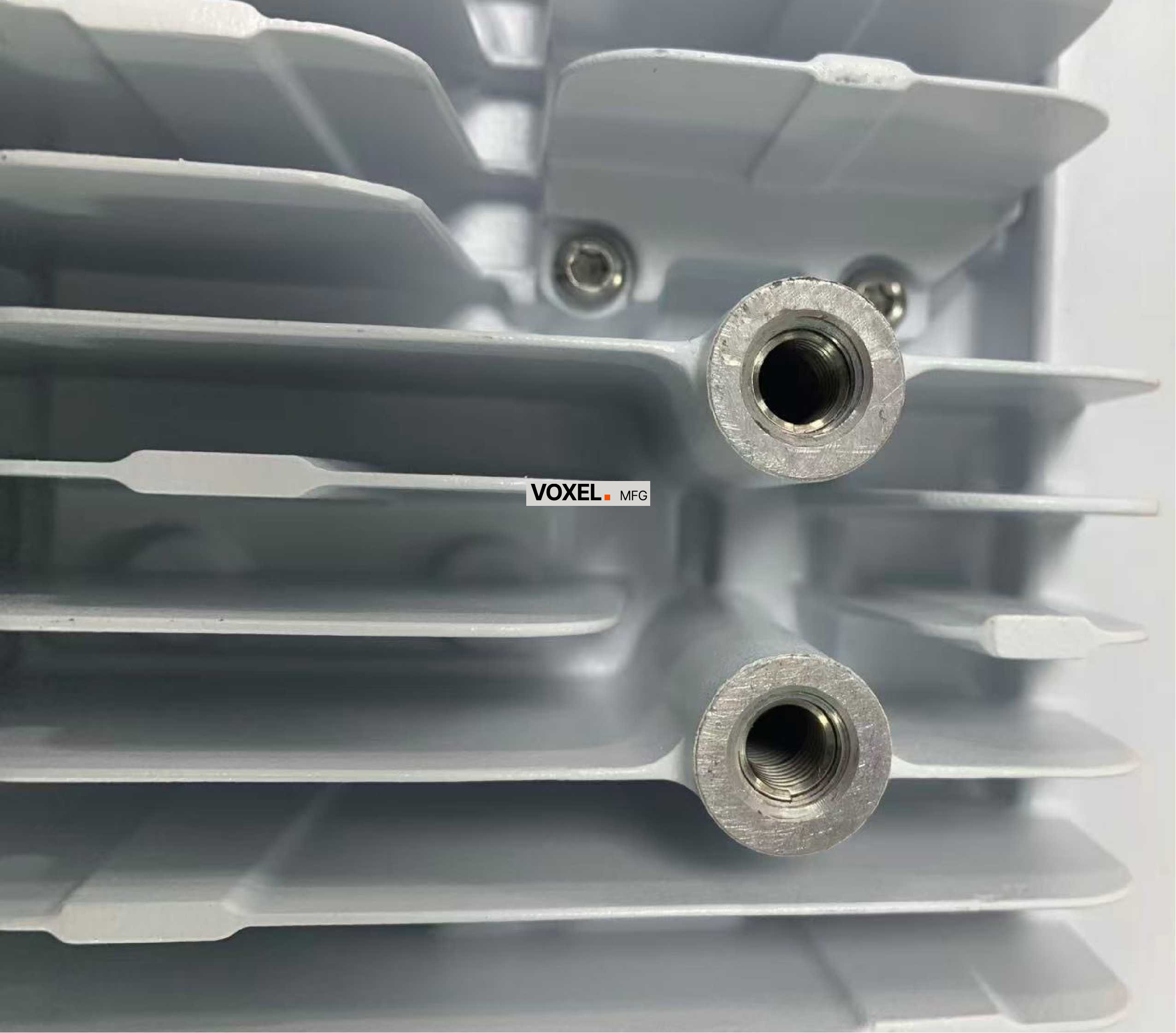
Breaking Thermal Bottlenecks in 5G RRUs: Extreme Thin-Wall Die Casting with High-TC Aluminum
A 5G RRU program needed more heat dissipation without a major geometry reset. We used gating redesign and high-vacuum die casting to support 60:1 aspect ratio fins in high-conductivity aluminum, helping the team improve thermal performance without reopening the full enclosure concept. Read the full case study →
0.86 mm fins froze early with cold shuts and porosity risk.
Thermal target verified at 180 W/m·K while keeping fin geometry unchanged in this iteration.
Best fit
Mid-Size OEM Scale-up Hardware Teams Telecom Program TeamsQuick Outcome: Thermal conductivity verified at 180 W/m·K with no major fin redesign in this iteration
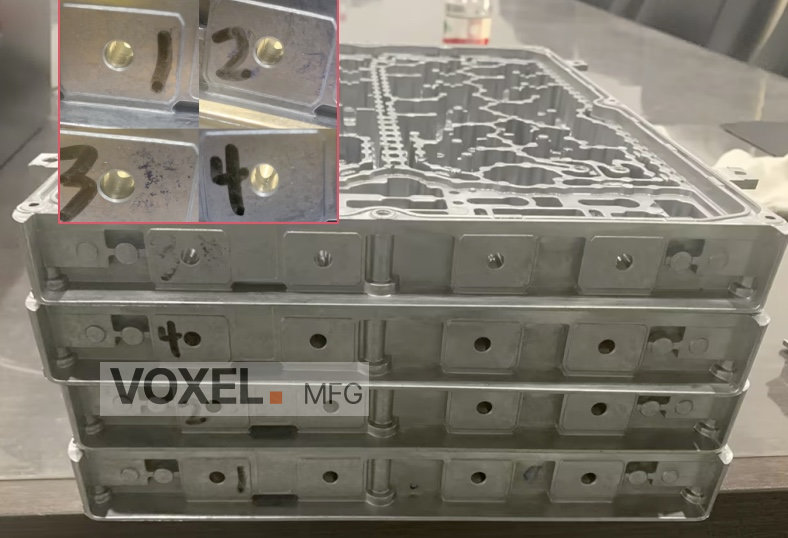
Solving Shrinkage Porosity and PIM Issues in RF Filter Cavities
This RF cavity had shrinkage porosity at the connector holes — die-cast features that cannot be reworked by machining — plus a mating face that needed telecom-grade finish for low-PIM contact. We eliminated porosity at the casting stage and optimized CNC finishing, restoring assembly-line yield. Read the full case study →
RF cavity showed both density loss and unstable low-PIM contact risk.
Dense cast structure + Ra ~0.12 mating surface (measured) for telecom-grade RF interface.
Best fit
Mid-Size OEM Enterprise Innovation Labs RF Hardware TeamsQuick Outcome: Connector-hole porosity eliminated + Ra 0.116 mating face — PIM passed, assembly-line yield restored
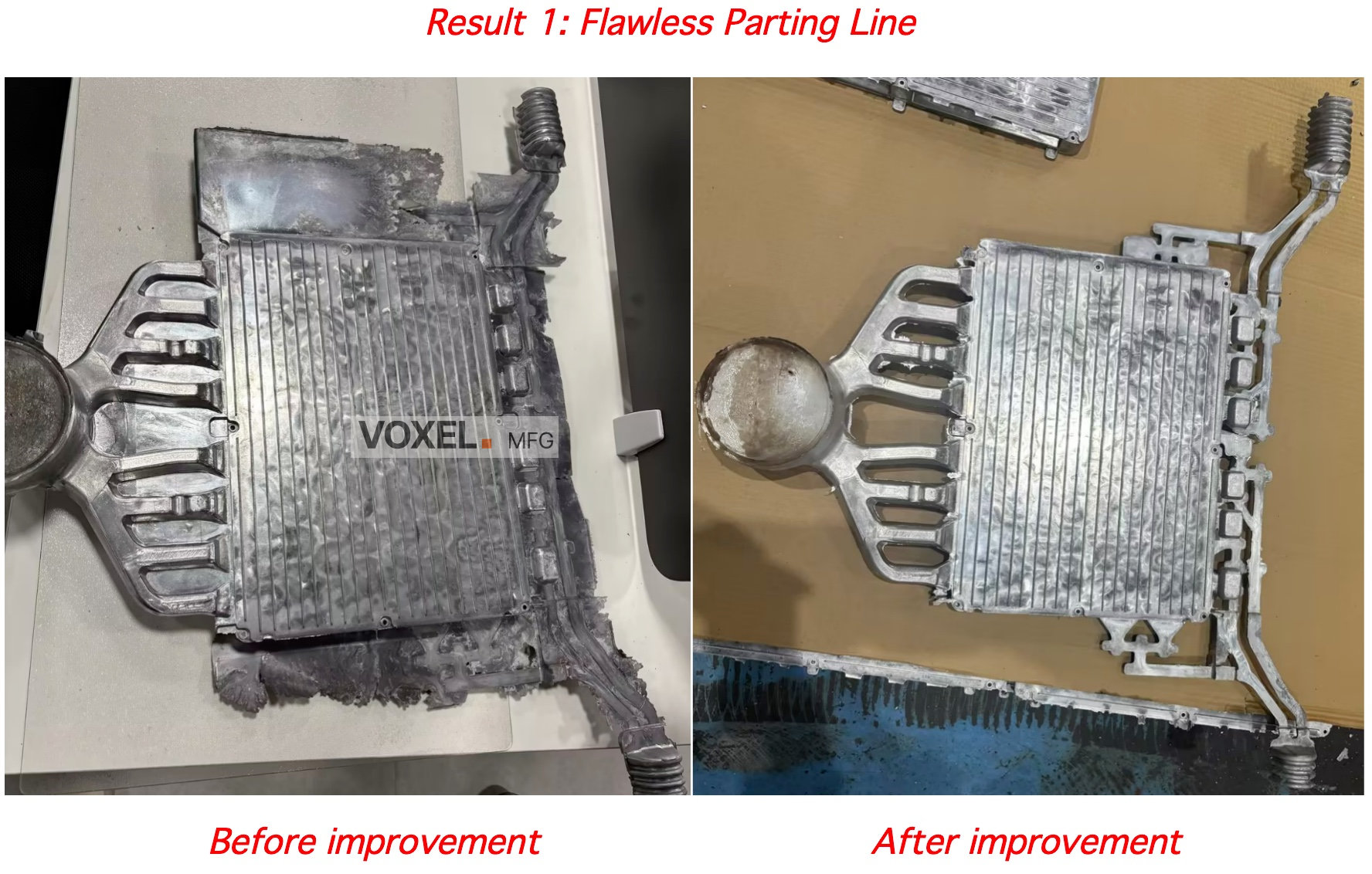
Resolving Severe Flash & Porosity in a Transferred Telecom Mold
A transferred telecom mold was producing flash and porosity severe enough to threaten the program timeline. We corrected the machine mismatch, repaired broken core pins, and reset thermal control so the customer could recover the mold instead of jumping straight to a rebuild. Read the full case study →
Transferred mold produced >1.0 mm flash and internal porosity.
Tool recovered on matched 1250T platform with stable density and dimensions.
Best fit
Mid-Size OEM Supplier Transfer Projects Operations Recovery TeamsQuick Outcome: Recovered transferred mold without rebuild — flash eliminated, density restored, $30K-50K rebuild avoided
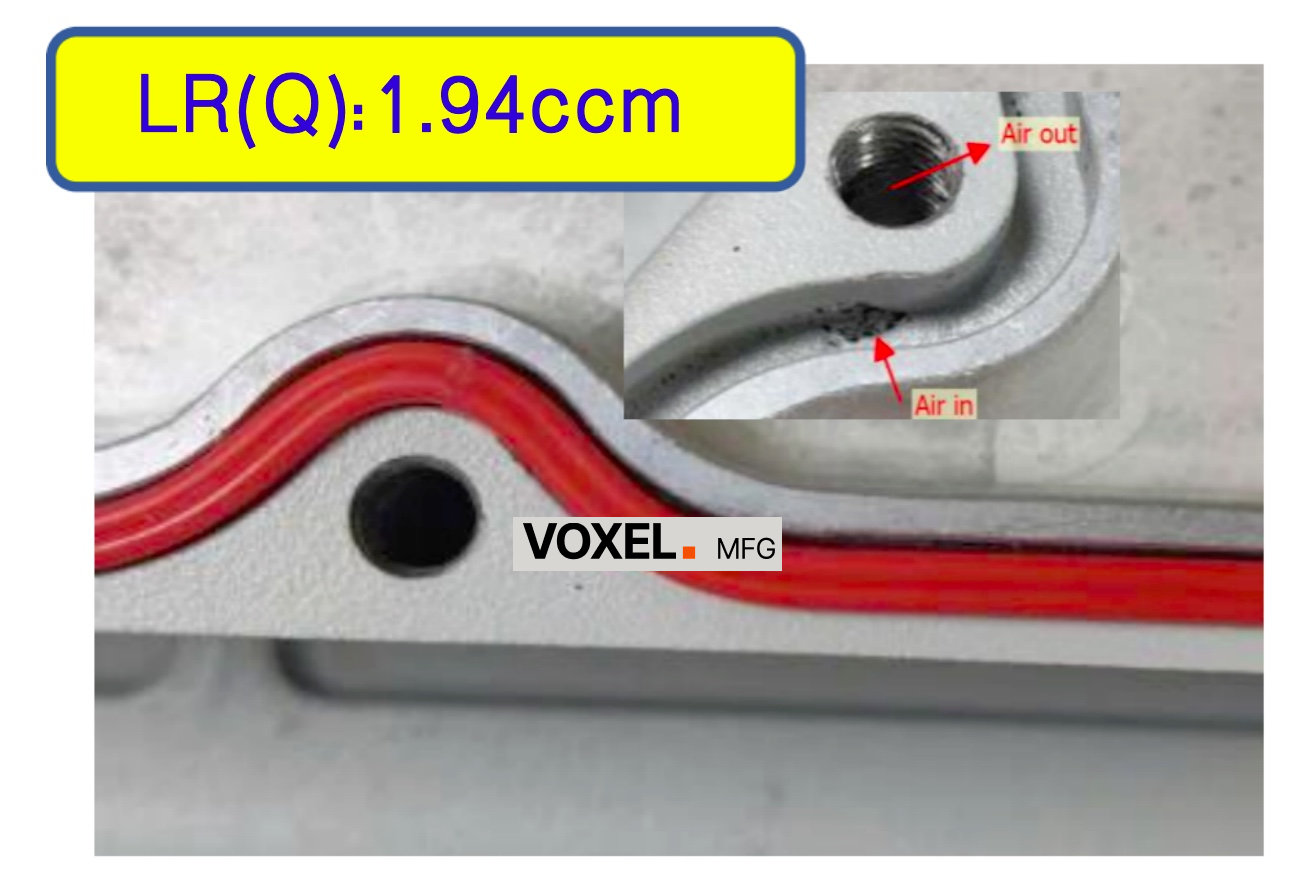
Reducing IP67 Air Leaks: A Tooling-Level Fix for Sand-Hole Porosity Between Mounting Hole and Gasket Groove
~10% of units failed IP67 after full assembly — each failure meant scrapping a finished product. The root cause was tiny sand holes penetrating between the mounting hole and the shielding gasket groove. We traced the problem with Moldflow, then changed runner geometry and shot sleeve sizing to eliminate porosity at the source. Read the full case study →
~10% of units failed IP67 after full assembly — each failure meant scrapping the entire finished product.
Sand-hole porosity between mounting hole and gasket groove eliminated at source; failure rate dropped to zero.
Best fit
Scale-up Hardware Teams Mid-Size OEM Rugged Device ProgramsQuick Outcome: ~10% → 0% failure rate — sand-hole porosity between mounting hole and gasket groove eliminated at source
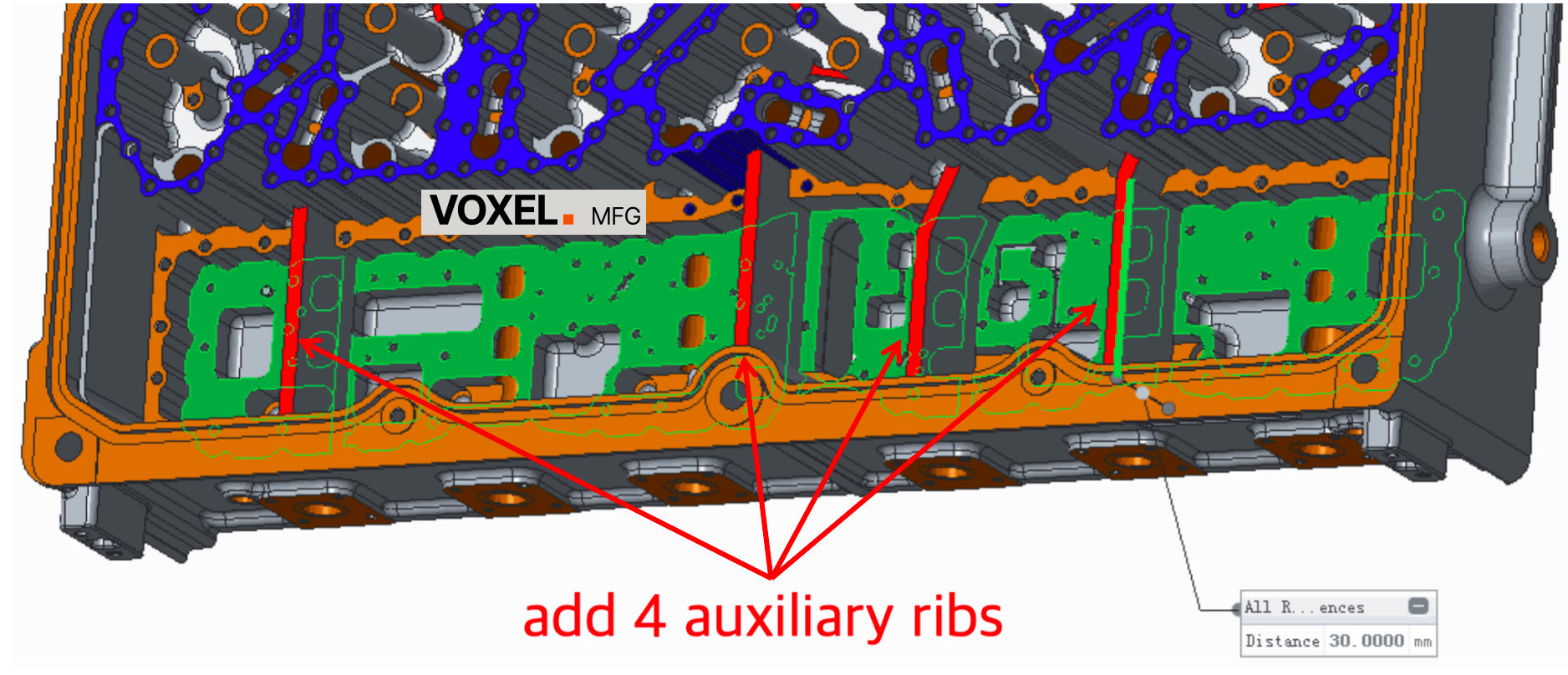
Reducing Porosity Risk Before Cutting Metal: RF-Aware DFM with 4 Auxiliary Ribs
Before tooling release for a communication cavity, Moldflow predicted shrinkage porosity in a thick section. VOXEL's RF engineers identified where four auxiliary ribs could be added without affecting RF performance, then machined off after casting. Risk and solution submitted to customer for confirmation before tooling — T1 came back clean. Read the full case study →
Moldflow predicted shrinkage porosity in communication cavity — squeeze pin would mean mold rework after T1.
Four RF-aware ribs added in CAD, customer-confirmed before tooling — T1 clean, zero rework.
Best fit
Startup Hardware Teams Scale-up NPI Programs Research-to-Production TeamsQuick Outcome: Shrinkage risk eliminated in CAD by RF-aware DFM — customer confirmed before tooling, T1 clean with zero rework